Insights · Privacy and Governance
Project Climate without employee profiling
Workflow conditions can be evaluated at aggregate project level without creating emotional profiles or employee scores.
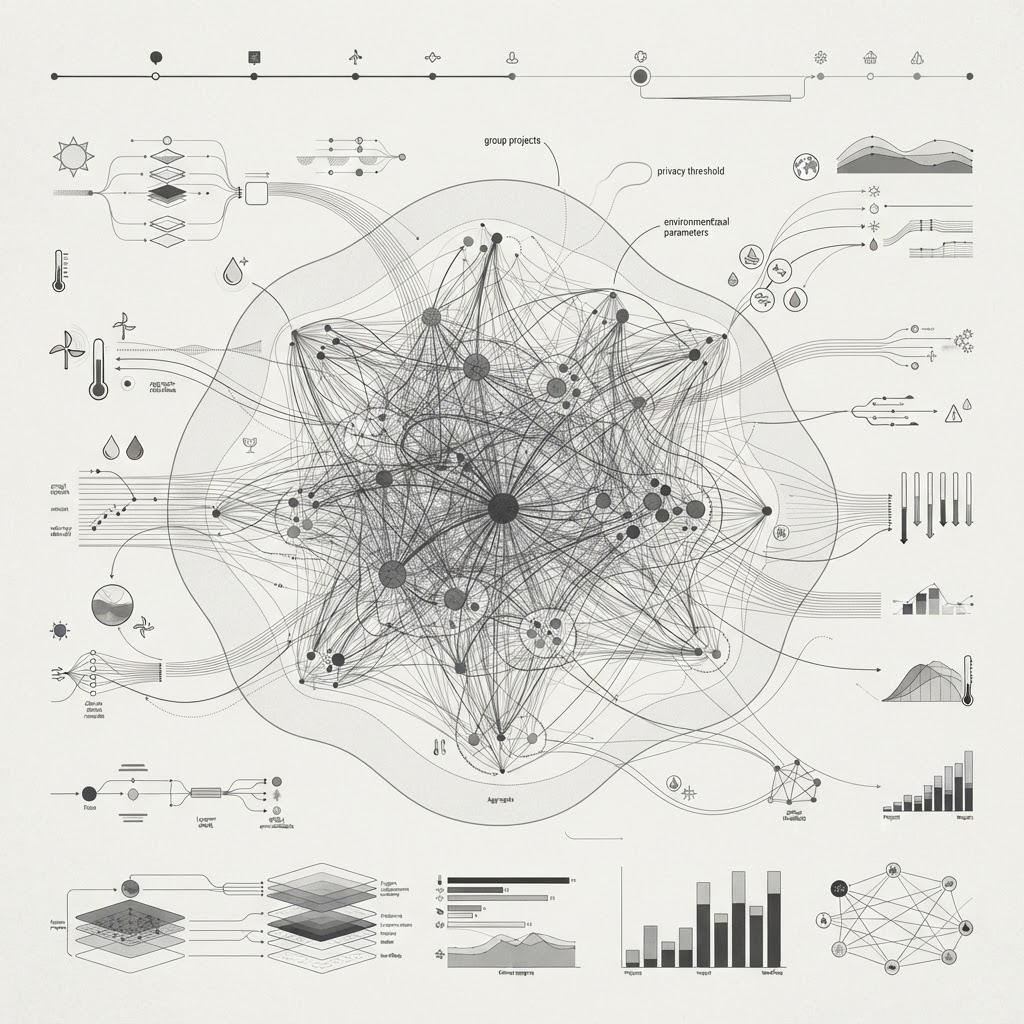
Project Climate is useful only within a strict boundary: aggregate analysis of a bounded workflow, adequate samples, suppressed small groups and no inference about individual emotion, personality or performance.
01
Aggregate-only analysis
Project Climate describes conditions visible across a defined initiative or workflow. It may indicate unclear ownership, unresolved friction, uneven alignment or decision pressure. It must not assign those conditions to named individuals.
Aggregate outputs help leaders improve process design. They do not support employment, performance or disciplinary decisions.
02
Bounded workflow context
Analysis should be limited to a stated purpose, period, participant group and workflow. General communication channels or unrelated employee data should not be combined to create a broader profile.
The boundary makes interpretation more accurate. Friction in one project stage does not define the culture of an organization or the disposition of a participant.
TALKTO+ does not measure people. It measures the execution conditions of a bounded workflow.
03
Sample adequacy and privacy thresholds
Small groups can make aggregate results indirectly identifiable. Minimum sample thresholds and group suppression prevent display when privacy cannot be maintained. Results should also state when evidence is too limited for a reliable interpretation.
Thresholds are context-dependent and should be reviewed with customer privacy and worker-governance requirements.
04
Friction, alignment and ownership clarity
Friction can indicate unresolved dependencies or competing interpretations. Alignment describes whether the workflow has a sufficiently shared objective and decision frame. Ownership clarity examines whether obligations are understood and accepted.
These are execution conditions, not emotional diagnoses. The same signal can have several explanations, so evidence and human validation are required.
05
Decision pressure and engagement
Decision pressure may rise when deadlines, uncertainty and unresolved authority converge. Engagement can be viewed as participation in the bounded workflow, not as motivation or loyalty. Low participation may reflect process design, access or timing.
Responsible interpretation asks what workflow condition could explain the pattern and what evidence would test it.
06
Prohibited individual interpretation
The system should not create emotional profiles, personality labels, employee scores or recommendations about individual suitability. It should not expose raw comments to audiences that lack a legitimate workflow need.
These prohibitions should be reflected in product design, access control, reporting and customer governance—not left as a policy note.
07
Why the boundary matters
Workplace AI can change power relationships even when its stated purpose is operational. Aggregate-only design reduces misuse risk and keeps attention on structures leadership can improve: clarity, evidence, ownership and decision process.
Legal, privacy and worker consultation requirements remain customer-specific. Aggregate design supports responsible use but does not automatically establish compliance.
FAQ
Direct answers
Does Project Climate score employees?
No. It evaluates aggregate execution conditions within a bounded workflow.
What happens with small groups?
Results should be suppressed when sample adequacy or privacy thresholds are not met.
Continue reading
Related articles
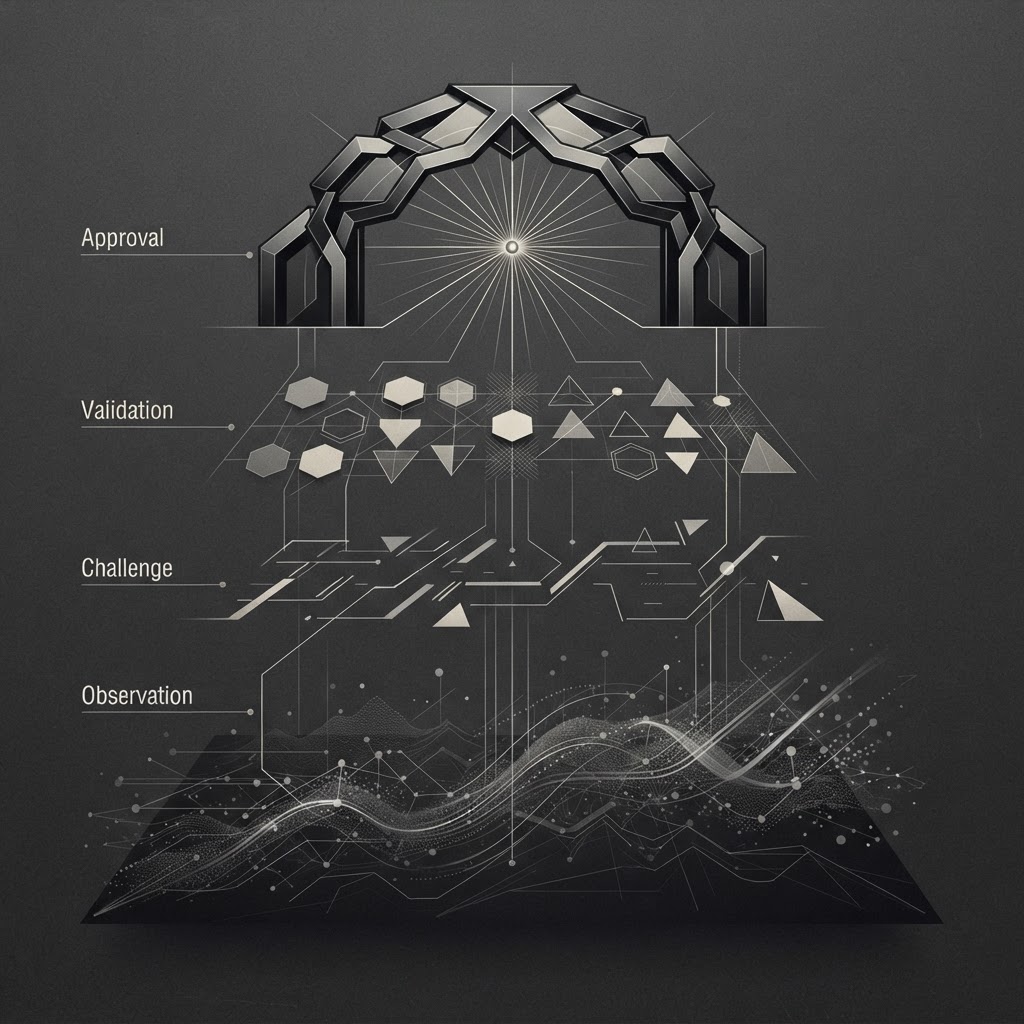
Evidence first: preventing AI observations from becoming organizational truth
AI output should remain an observation until evidence, challenge and human validation justify operational use.
Read article →
AI-native execution inside the enterprise boundary
How enterprise-local AI, governed workflows, secure data architecture and Execution Intelligence can create a scalable cognitive operating layer for modern organizations.
Read article →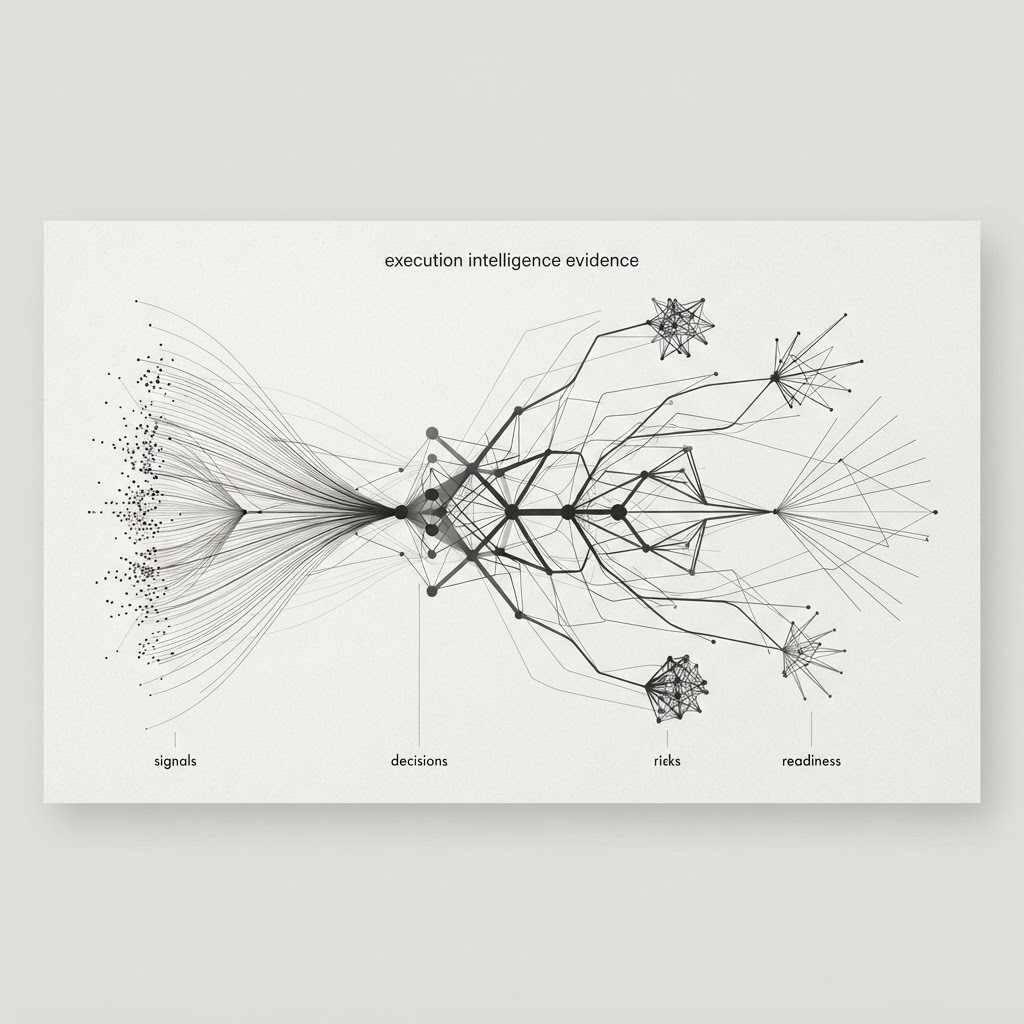
What is Execution Intelligence — and why dashboards are not enough
Execution Intelligence connects signals, evidence, assumptions, risks, decisions and human validation into a governed operating model.
Read article →