Insights · Execution Intelligence
What is Execution Intelligence — and why dashboards are not enough
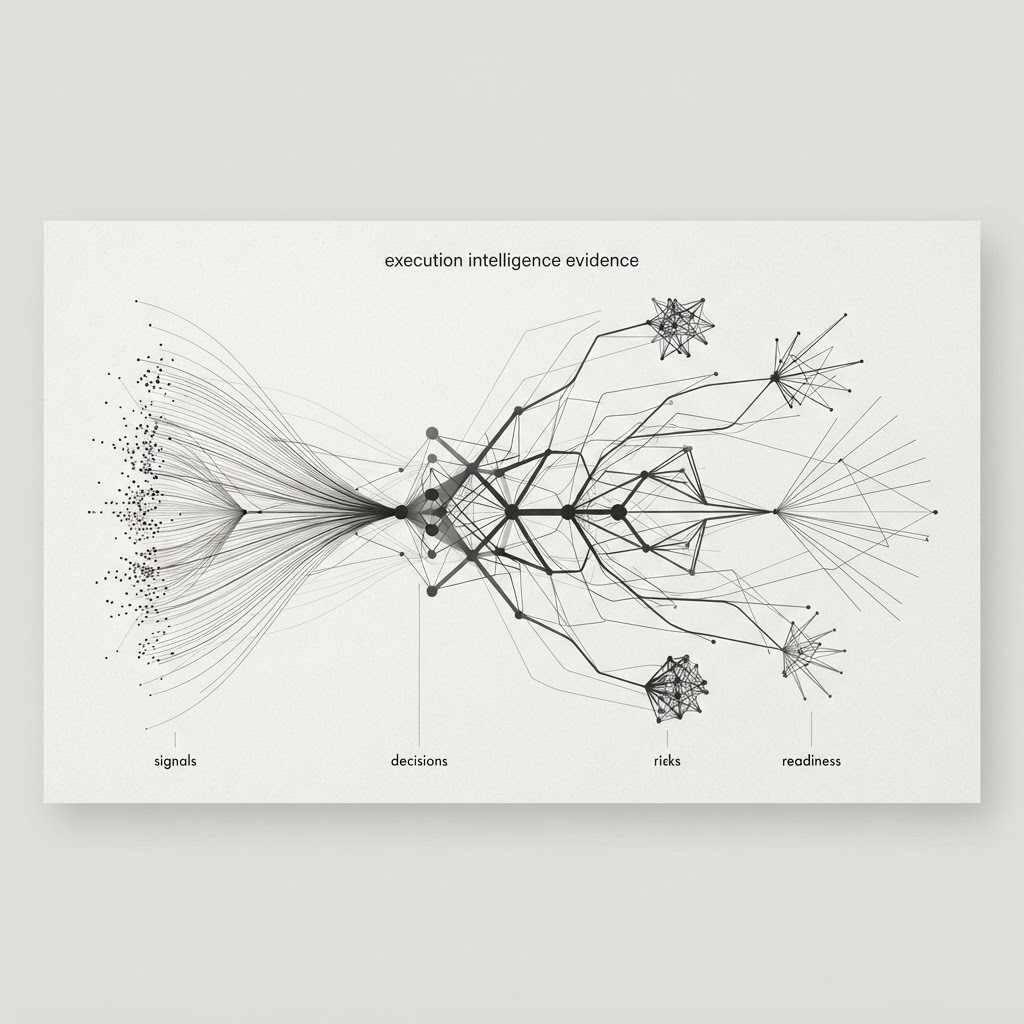
Execution Intelligence connects signals, evidence, assumptions, risks, decisions and human validation into a governed operating model.
Organizations rarely lack data. They lack continuity between what teams observe, what evidence supports, what leaders decide and what execution requires next. Execution Intelligence creates that continuity without pretending that software can replace accountable judgment.
01
A governed view of what can happen next
Execution Intelligence is the disciplined connection of operational signals, referenced evidence, explicit assumptions, execution risks, decisions and human validation. Its purpose is not to produce a more decorative status view. It is to help an organization determine whether a proposed action is sufficiently understood, owned and supported to proceed.
The unit of analysis is an initiative or bounded workflow, not an employee. Signals may come from plans, workshops, project systems, collaboration channels or expert review. They become useful only when the workflow records their source, relevance, confidence and relationship to a decision.
02
Visibility is not readiness
A dashboard can show budget variance, milestone status and issue counts. Those measures matter, but they do not reveal whether stakeholders interpret the objective consistently, whether a dependency owner has accepted responsibility, or whether a central assumption has survived challenge. Visibility describes a condition; readiness evaluates the conditions required for commitment.
This distinction matters most before a plan becomes expensive to change. A green milestone can coexist with unresolved architecture, weak evidence or contradictory stakeholder expectations. Execution Intelligence keeps these uncertainties visible instead of averaging them into a reassuring status color.
A dashboard describes what has happened. Execution Intelligence helps an organization understand what is ready to happen next.
03
From signals to validated evidence
A signal is an indication that deserves attention: repeated concern, an unclear requirement, an unexplained delay or disagreement between plans. It is not automatically a fact. A governed workflow links the signal to documents, decisions, expert testimony or system records and states what remains uncertain.
Human validators then confirm, qualify or reject the interpretation. The distinction protects leadership from fluent but unsupported AI language. It also allows later reviewers to understand why a risk was accepted, why an assumption changed and what evidence was available at the time.
04
Risk, readiness and decision continuity
Execution risk is not a separate list maintained after planning. It emerges from the relationship between objectives, assumptions, capabilities, dependencies and ownership. Readiness expresses whether those relationships are strong enough for the next stage. Decision continuity preserves how the organization moved from evidence to conclusion.
Together, these elements create a traceable thread. A new dependency can reopen an earlier readiness conclusion. A rejected assumption can recall an Action Card. A leadership decision can be mapped back to the evidence and alternatives that shaped it rather than remaining an isolated meeting note.
05
Connecting Boardroom and workflow
Leadership needs a compressed view: validated risks, evidence coverage, open assumptions, required decisions and accountable owners. Delivery teams need the operational detail behind those statements. Execution Intelligence connects both levels without sending raw discussion into the Boardroom or reducing complex conditions to a single opaque score.
For example, a manufacturing transformation may appear on schedule while plant interfaces remain untested. The Boardroom view should identify the readiness condition, affected decision and containment action. The workflow should retain technical evidence, divergent views and validation history. Both views refer to the same governed object.
06
Reporting compared with execution guidance
Reporting asks what happened and whether performance differs from plan. Execution guidance asks what the organization knows, what it assumes, what could prevent the next commitment and who must decide. Guidance does not mean autonomous management. It means structuring the evidence and choices so accountable people can act with fewer hidden conditions.
Useful examples include testing whether a digital program has an accepted data owner, whether a consortium partner can deliver a promised capability, or whether a service redesign depends on customer behavior that has not been validated. In each case, the output is a decision-ready condition, not a prediction presented as certainty.
07
Why human validation remains essential
AI can organize large evidence sets, identify contradictions and propose risk interpretations. It cannot carry organizational accountability or fully understand local consequence. Experts must judge whether evidence is adequate; Workflow Stewards must protect process quality; leaders must accept, defer or reject consequential decisions.
The practical benefit is not removal of judgment but better preparation for it. When evidence, dissent and assumptions are explicit, human review becomes more focused and auditable. Execution Intelligence therefore treats validation as architecture, not as a manual exception added after automation.
FAQ
Direct answers
Is Execution Intelligence another dashboard?
No. Dashboards describe selected measures; Execution Intelligence connects evidence, assumptions, risks, readiness and decisions in a governed workflow.
Does it automate leadership decisions?
No. It prepares decision conditions and preserves traceability while accountable people make consequential decisions.
Continue reading
Related articles
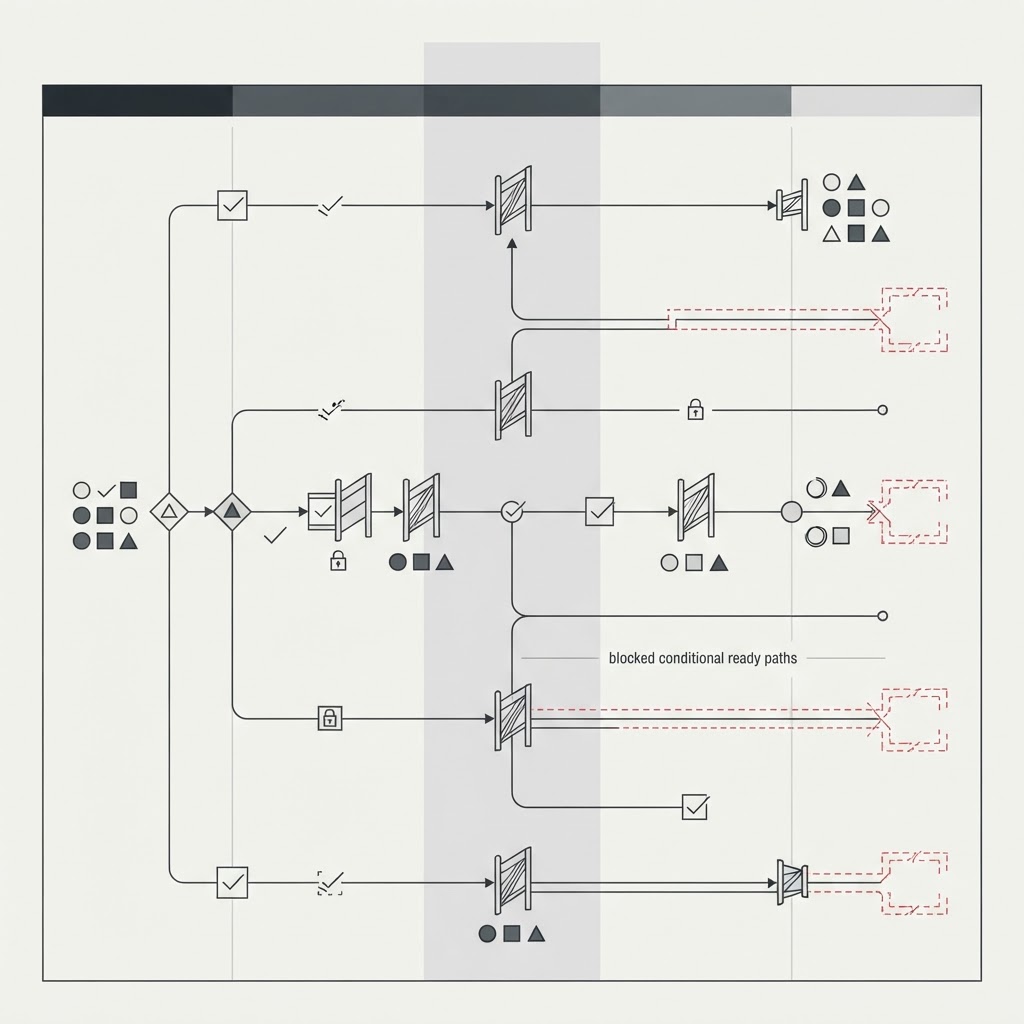
Execution Readiness: what leadership should know before commitment
A structured way to evaluate whether a plan has sufficient clarity, ownership, evidence and capability to move forward.
Read article →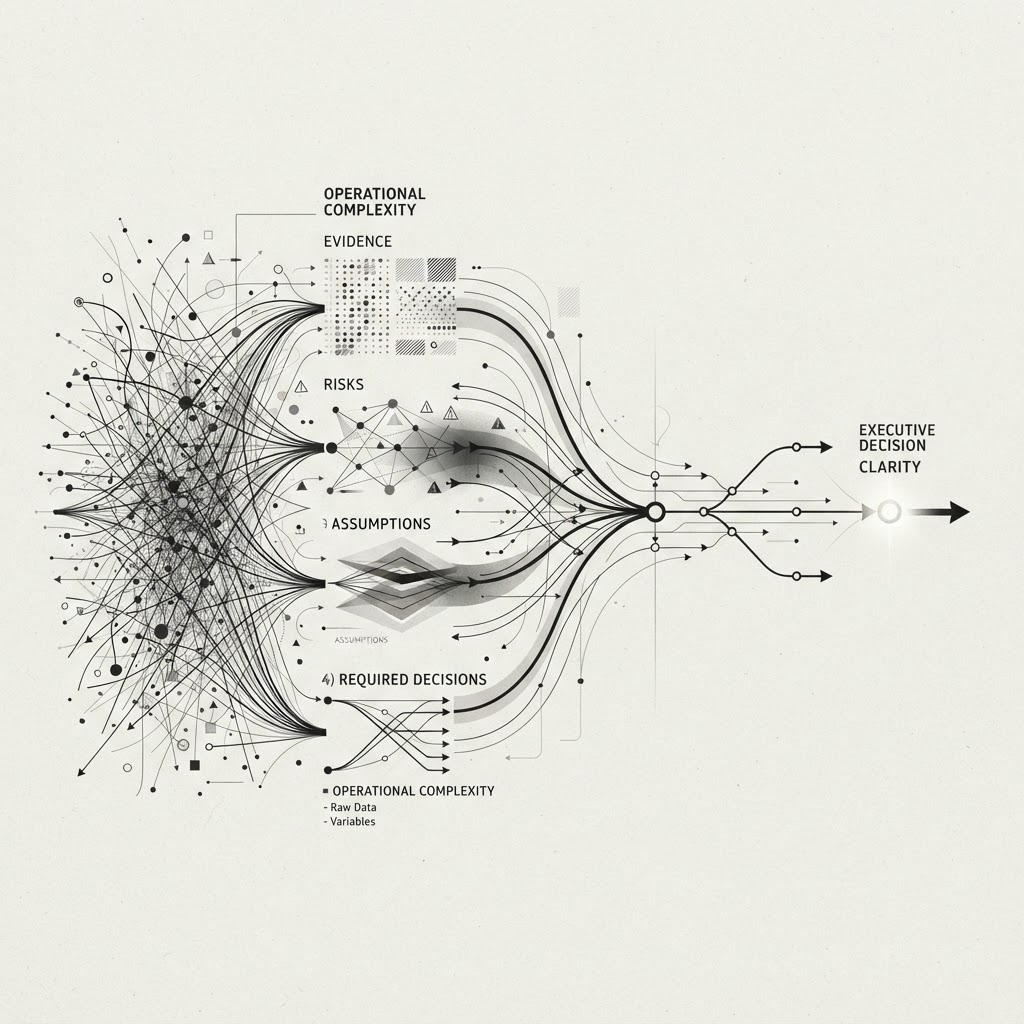
Boardroom Intelligence: turning operational complexity into validated decisions
Leadership needs validated readiness, evidence and required decisions — not another stream of raw operational data.
Read article →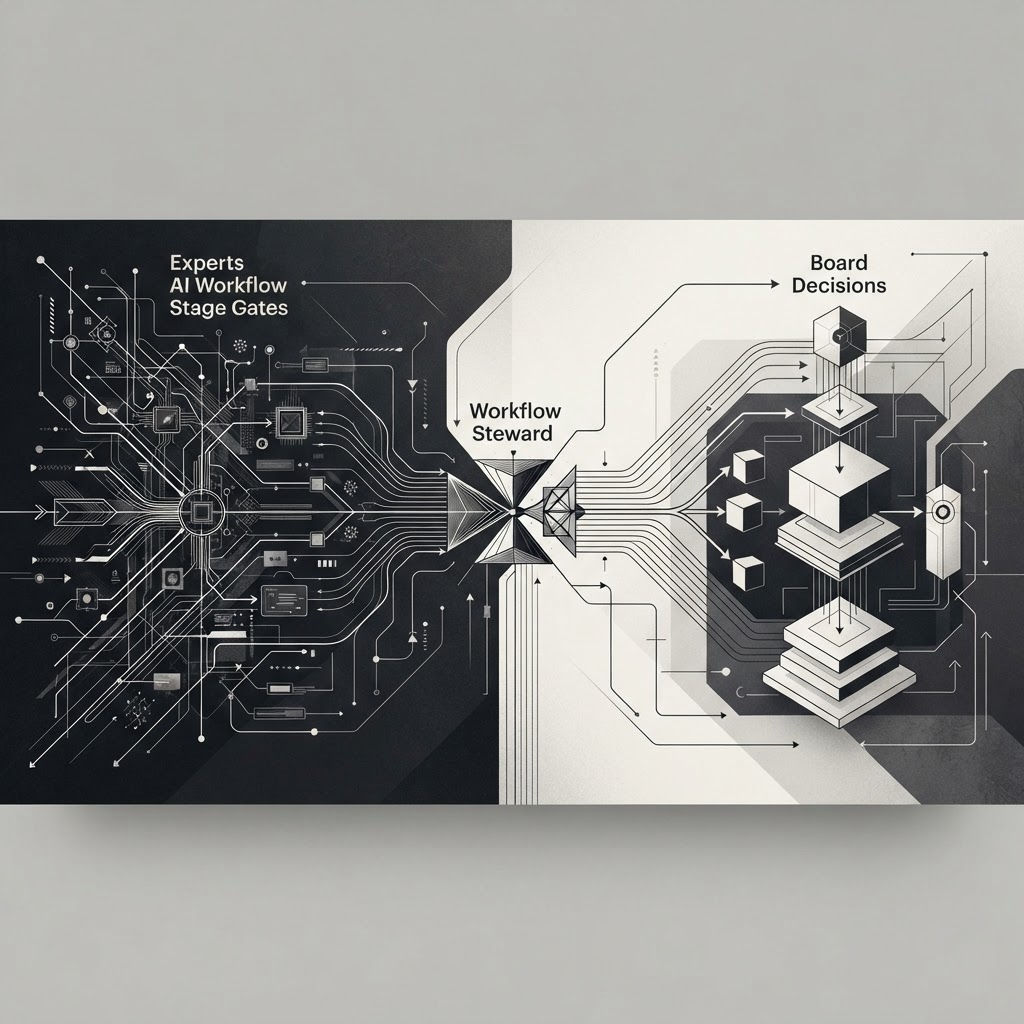
The Workflow Steward: the missing role between experts, AI and leadership
The Workflow Steward maintains process quality, evidence discipline and stage readiness without replacing expert judgment.
Read article →