Insights · Execution Readiness
Execution Readiness: what leadership should know before commitment
A structured way to evaluate whether a plan has sufficient clarity, ownership, evidence and capability to move forward.
Readiness is not confidence expressed more loudly. It is a reviewable condition built from evidence, ownership, capability, dependencies, assumptions and the decisions required for the next stage.
01
Readiness versus optimism
Plans often move forward because sponsors are confident, deadlines are visible and teams have already invested effort. None of these conditions proves that execution can begin responsibly. Readiness asks whether the initiative has enough clarity, evidence, ownership and capability for the specific commitment being considered.
The answer is stage-dependent. A concept can be ready for design while blocked for procurement. A pilot can be ready with explicit conditions while an enterprise rollout remains premature. The purpose is not to demand certainty but to make residual uncertainty visible.
02
Evidence coverage and confidence
Evidence coverage shows which important claims have support and which remain dependent on assumption. Confidence should reflect source quality, consistency, recency and validation, not model fluency or the number of documents uploaded. A high-confidence statement can still be wrong, so consequential findings require review.
Leadership should look for material gaps rather than a cosmetic aggregate score. If benefits depend on behavior that has not been observed, or architecture depends on an interface that has not been tested, the readiness condition should say so directly.
Optimism is a sentiment. Execution Readiness is a governed condition that can be challenged and revised.
03
Ownership, dependencies and capability
Ownership is clear when a named role understands the obligation, has authority to act and accepts the required timing. A name in a slide is insufficient. Dependencies need the same treatment: provider, consumer, condition, timing and evidence of acceptance.
Capability includes skills, capacity, technology, decision rights and operating support. A plan can be strategically sound yet blocked because critical expertise is unavailable or because an operational team cannot absorb the proposed change. Readiness keeps these constraints inside the decision.
04
Assumptions and divergent views
Every plan contains assumptions. Risk increases when they are implicit, shared only within one group or repeated until they sound like facts. A readiness workflow records the assumption, its owner, supporting evidence, expiry condition and impact if false.
Divergent views are equally important. A disagreement may reveal different definitions, incentives or evidence bases. The goal is not forced consensus but a documented resolution, bounded uncertainty or explicit leadership choice.
05
Ready, conditional and blocked
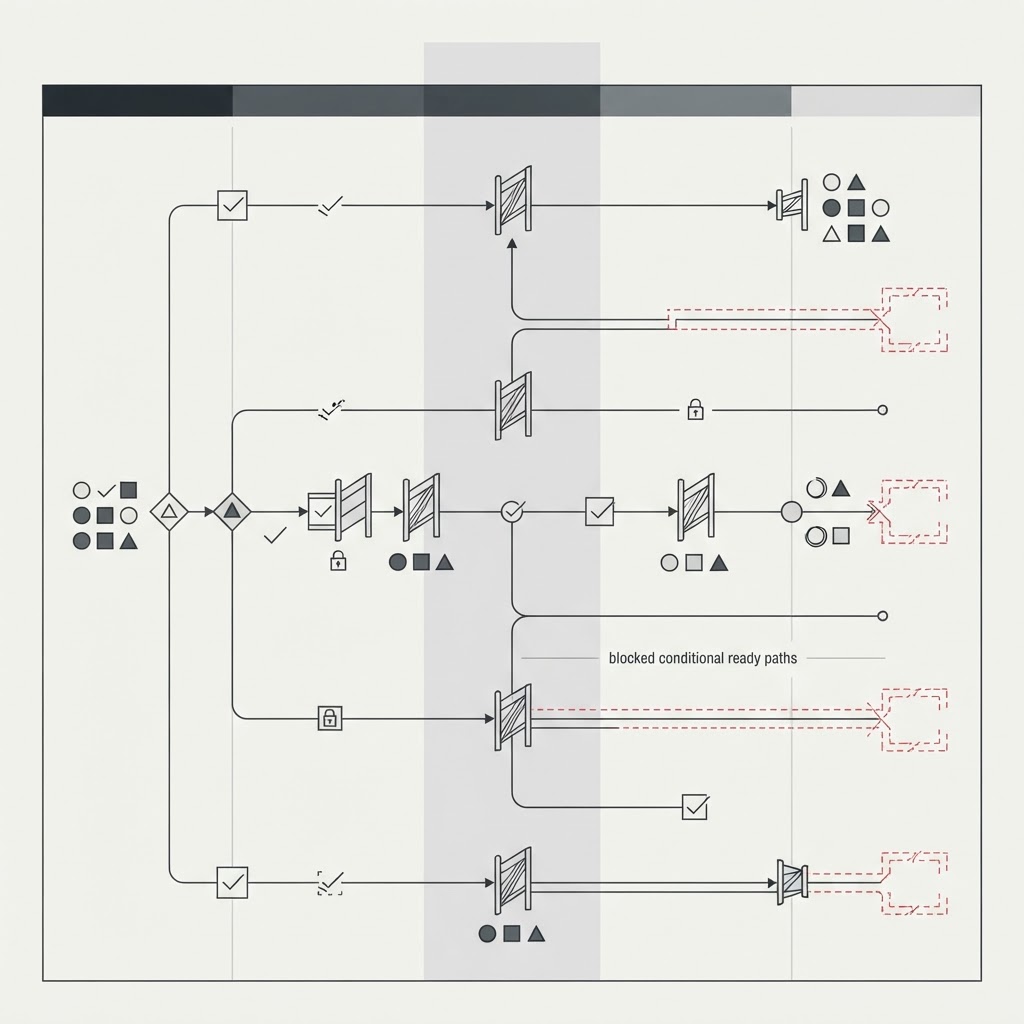
Ready means the evidence and controls are adequate for the next defined stage. Conditional means execution may proceed if named controls, owners or deadlines remain active. Blocked means a material condition prevents responsible commitment. These states should always be accompanied by reasons and required decisions.
Conditional is not a softer version of green. It is an operational contract. If the condition fails, the workflow should trigger review rather than allowing the label to persist. A blocked state should identify the smallest credible path to resolution.
06
How leadership should interpret the result
Leadership should ask what decision the readiness state supports, what evidence is missing, what risk is being accepted and who owns each condition. It should avoid comparing initiatives with a single universal score when their stage, evidence and consequence differ.
A portfolio view can still reveal recurring structural risks, such as weak data ownership or repeated supplier dependencies. Those patterns inform governance and capability investment without converting individual employees into performance scores. TALKTO+ evaluates initiative and workflow conditions; it does not score employees.
07
A practical commitment example
Consider a multi-site process rollout. Design may be complete, but local data ownership is unresolved and two plants interpret the operating standard differently. The initiative could be conditional for a limited pilot, with named validation and containment actions, while blocked for broad deployment.
That result gives leadership a usable choice. It prevents a binary approve-or-delay debate, keeps the evidence visible and defines what must change before the next commitment. Readiness becomes a living governance object rather than a one-time workshop output.
FAQ
Direct answers
Does readiness eliminate uncertainty?
No. It makes material uncertainty, conditions and ownership visible before commitment.
Does TALKTO+ score employees?
No. It evaluates the execution conditions of initiatives and bounded workflows, not individual performance.
Continue reading
Related articles
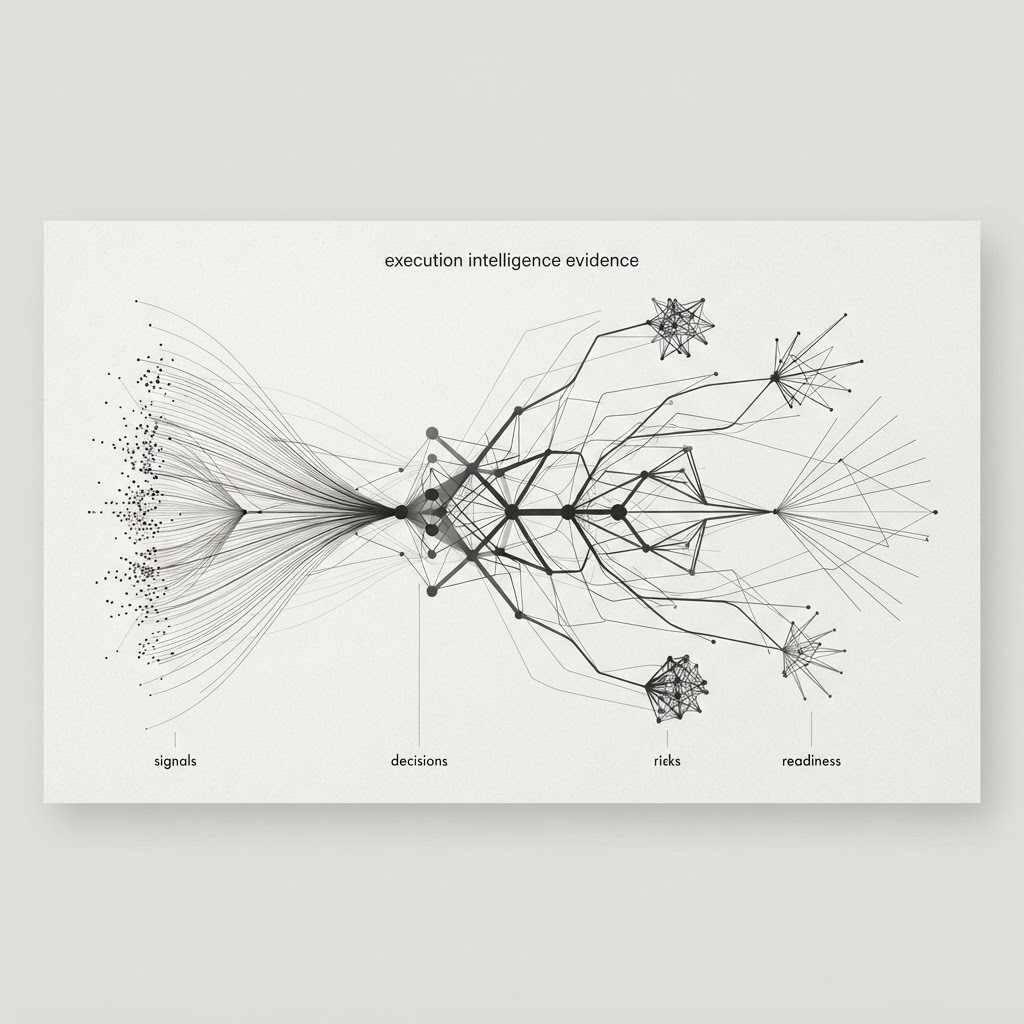
What is Execution Intelligence — and why dashboards are not enough
Execution Intelligence connects signals, evidence, assumptions, risks, decisions and human validation into a governed operating model.
Read article →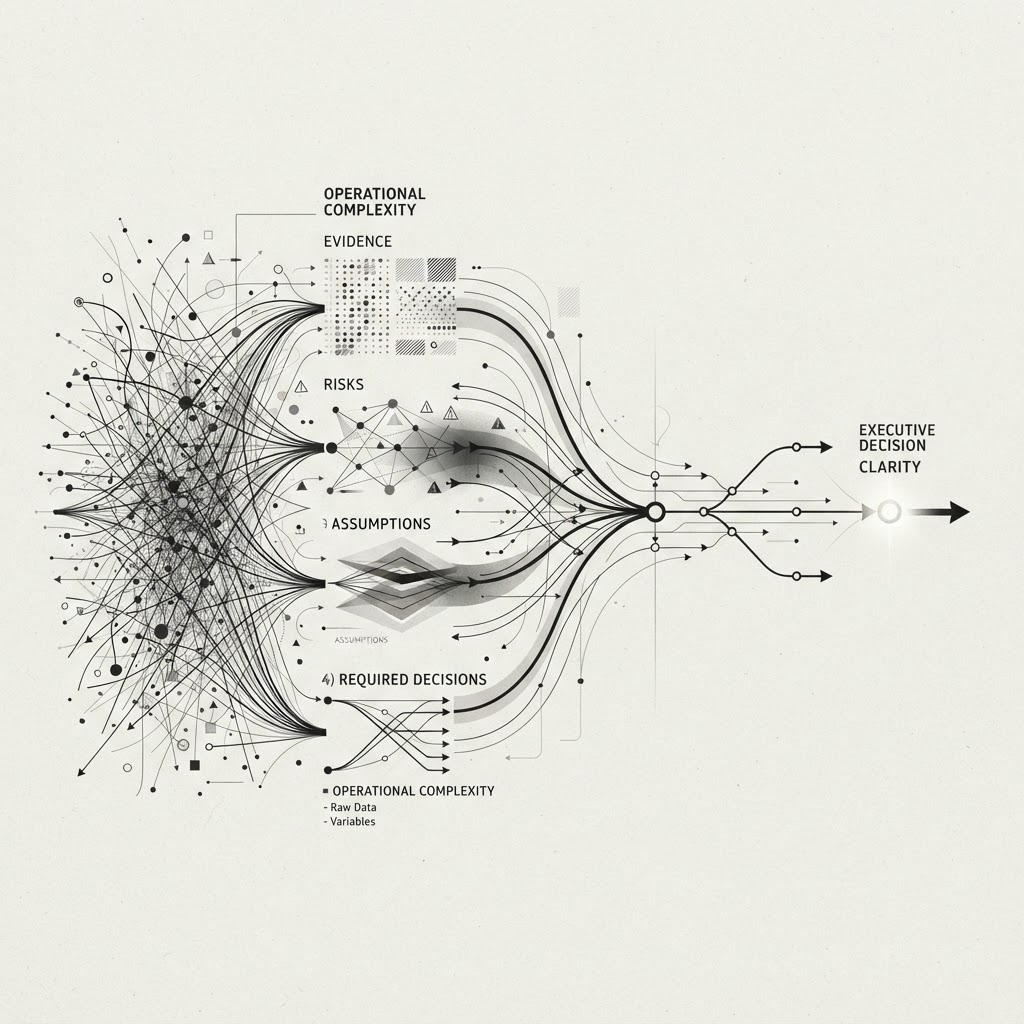
Boardroom Intelligence: turning operational complexity into validated decisions
Leadership needs validated readiness, evidence and required decisions — not another stream of raw operational data.
Read article →
The Workflow Steward: the missing role between experts, AI and leadership
The Workflow Steward maintains process quality, evidence discipline and stage readiness without replacing expert judgment.
Read article →