Insights · Boardroom Intelligence
Boardroom Intelligence: turning operational complexity into validated decisions
Leadership needs validated readiness, evidence and required decisions — not another stream of raw operational data.
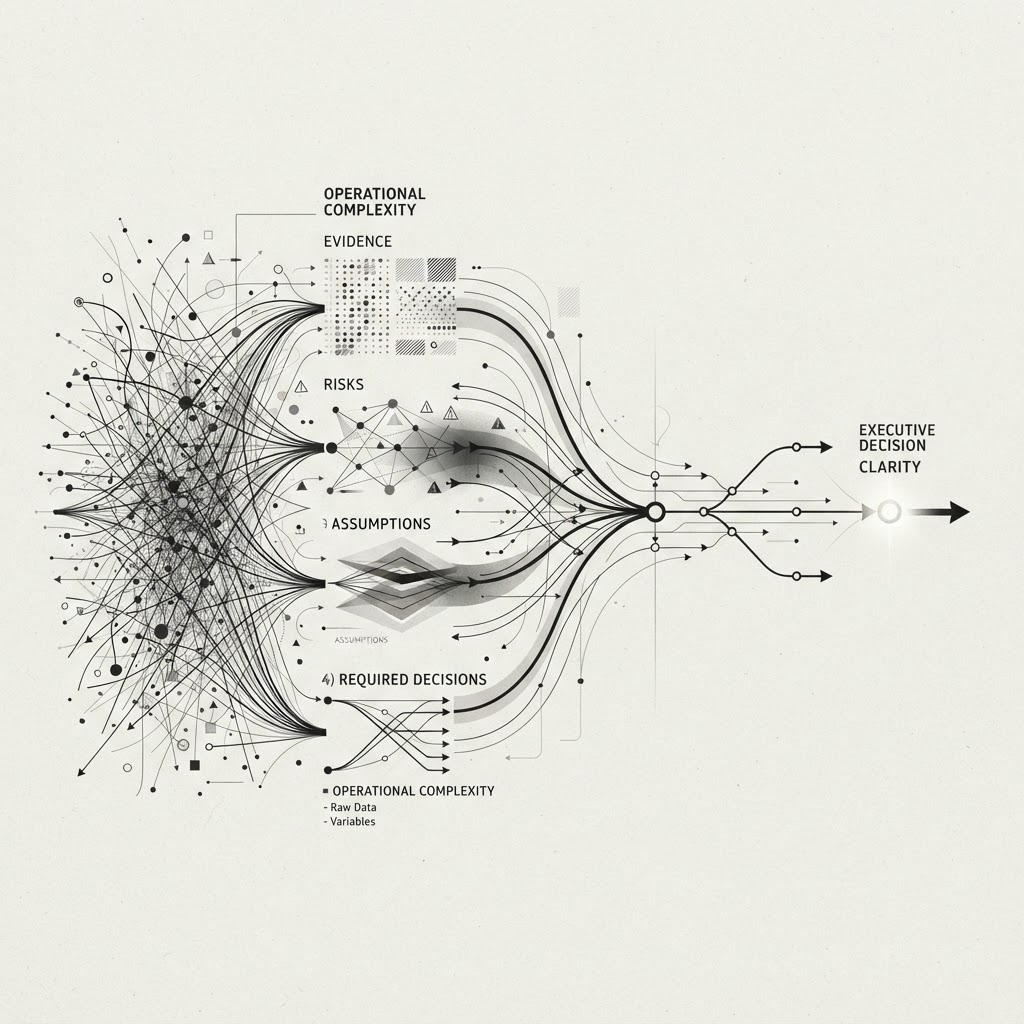
Boardroom Intelligence is the disciplined compression of operational complexity into validated risks, evidence coverage, open assumptions, readiness conditions and decisions that require accountable leadership action.
01
The executive information overload problem
Executives receive dashboards, steering packs, issue logs, financial reports and presentation narratives. More information can reduce clarity when sources disagree, uncertainty is hidden and every team uses a different status language. The problem is not access; it is decision preparation.
Boardroom Intelligence organizes only what leadership must understand or decide. It retains links to operational detail without reproducing every task, transcript or local discussion.
02
Validated risks and evidence coverage
A risk belongs in the Boardroom view when it is material, sufficiently supported and connected to a decision or oversight duty. The view should show evidence coverage and unresolved challenge so a polished sentence is not mistaken for certainty.
Evidence coverage also reveals where leadership is being asked to act with incomplete information. That may be acceptable, but the uncertainty and containment plan should be explicit.
The Boardroom needs decision conditions, not a second copy of operational conversation.
03
Open assumptions and decision requirements
Open assumptions should identify consequence, owner, validation path and the date or event that forces resolution. Decision requirements state what choice is needed, why now, which alternatives remain and what happens if the decision is deferred.
This format prevents passive escalation. Leadership sees a bounded request instead of a general warning and can return a decision with rationale and conditions to the workflow.
04
Action Cards and workflow status
An Action Card connects a validated finding to ownership, action, deadline, evidence and status. It should not be a detached task. Its lifecycle remains linked to the risk or readiness condition it is intended to change.
Workflow status distinguishes work in preparation, under validation, conditional, blocked or ready. Confidence and cascade warnings help leaders understand whether a conclusion is stable or dependent on unresolved conditions.
05
What should not appear
Raw workshop conversation, individual sentiment, employee rankings and unvalidated AI observations should not appear in Boardroom views. Nor should every operational exception. These materials create privacy risk, invite misinterpretation and distract from accountable decisions.
The compression process must remain traceable. Authorized reviewers can inspect supporting evidence when necessary, but the primary view stays focused on initiative conditions and required governance.
06
Maintaining Boardroom-to-workflow continuity
A leadership decision should return to the workflow with scope, conditions and rationale. Teams can then implement it without relying on informal retelling. If evidence changes, the same thread supports recall and revalidation.
This continuity is especially valuable across portfolios. Recurring ownership gaps or capability constraints become visible as structural patterns while the system avoids individual analytics.
07
A practical leadership view
For an enterprise data program, the Boardroom may need four things: whether data ownership is accepted, which privacy review remains open, whether integration evidence supports the rollout and what decision is required on local versus hosted processing.
The underlying workflow can contain technical tests, expert dissent and source documents. The Boardroom sees validated readiness, residual risk and the action required. Complexity is not erased; it is governed and made decision-ready.
FAQ
Direct answers
Is Boardroom Intelligence another executive dashboard?
It focuses on validated readiness, evidence, assumptions and required decisions rather than simply aggregating operational metrics.
Does it include employee analytics?
No. Boardroom views should focus on initiative and workflow conditions, not individual scoring or raw discussion.
Continue reading
Related articles
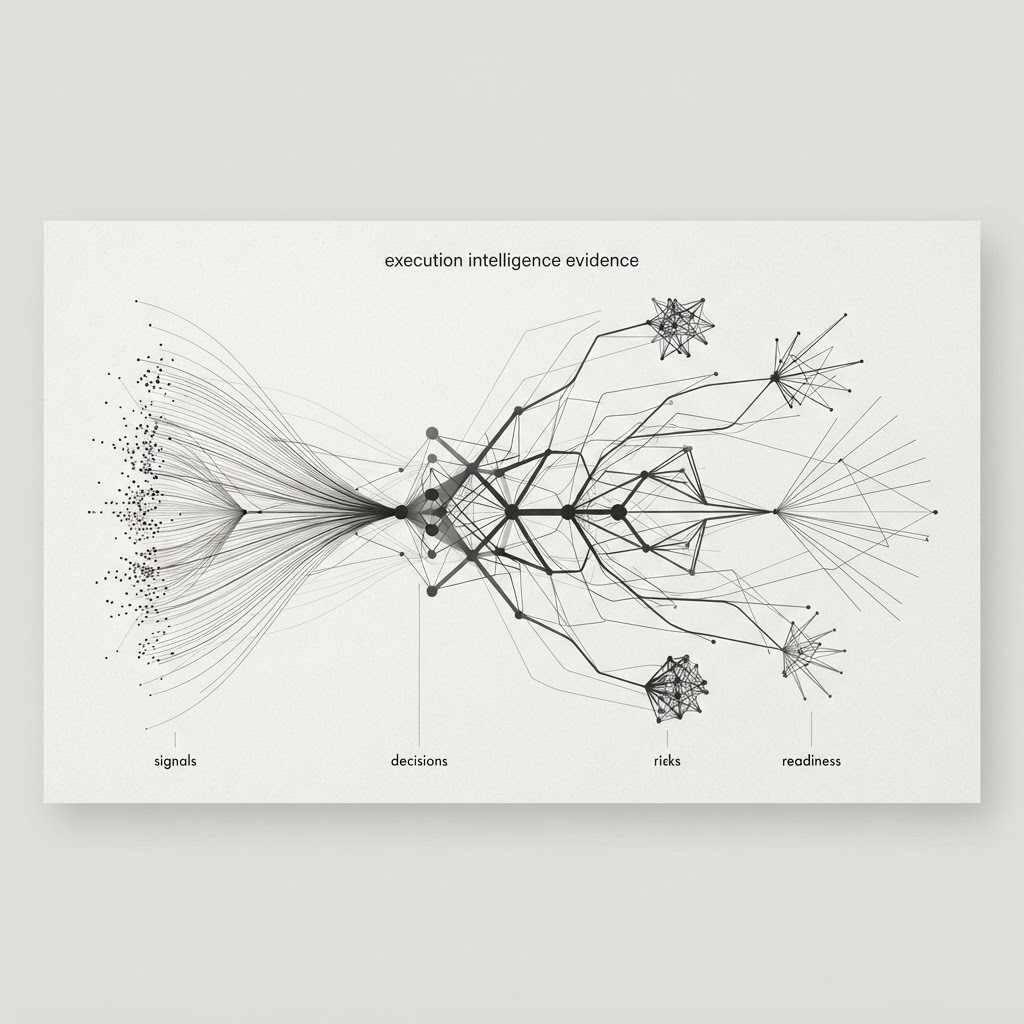
What is Execution Intelligence — and why dashboards are not enough
Execution Intelligence connects signals, evidence, assumptions, risks, decisions and human validation into a governed operating model.
Read article →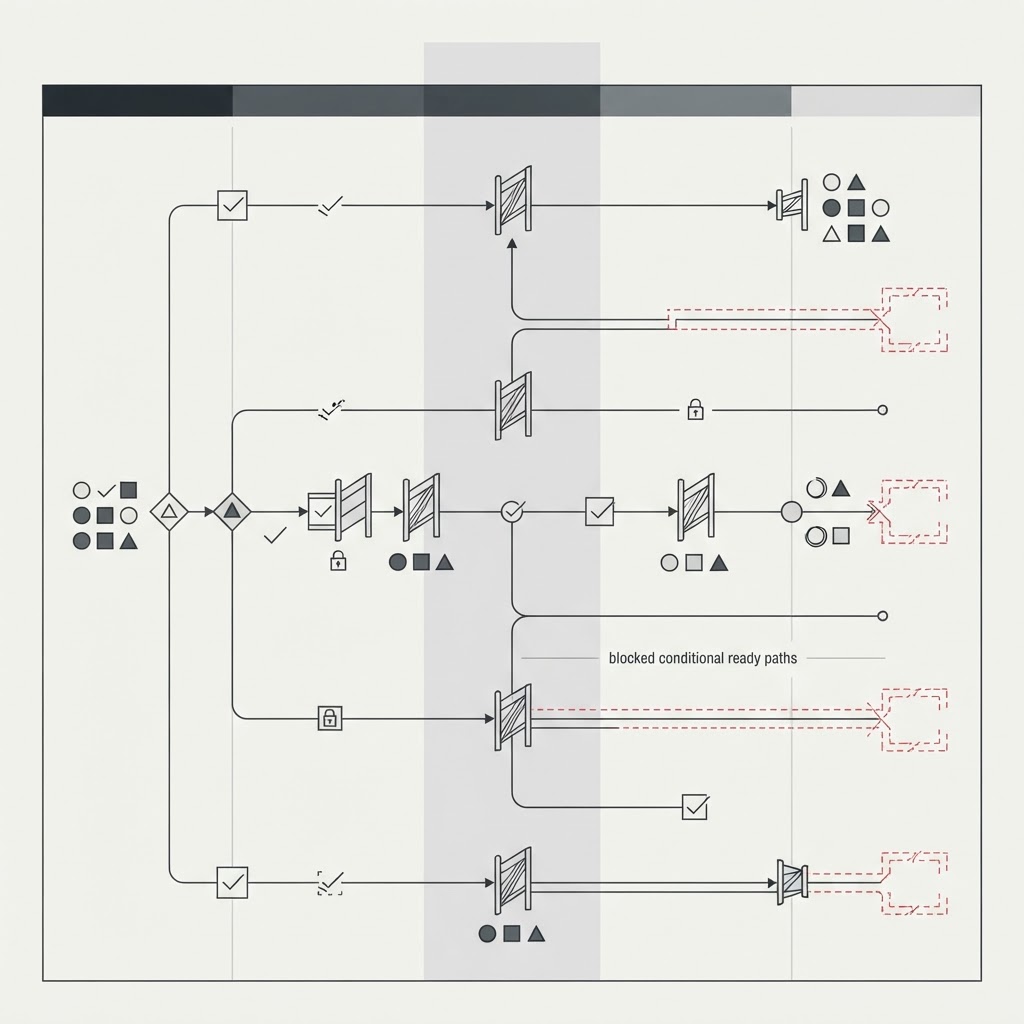
Execution Readiness: what leadership should know before commitment
A structured way to evaluate whether a plan has sufficient clarity, ownership, evidence and capability to move forward.
Read article →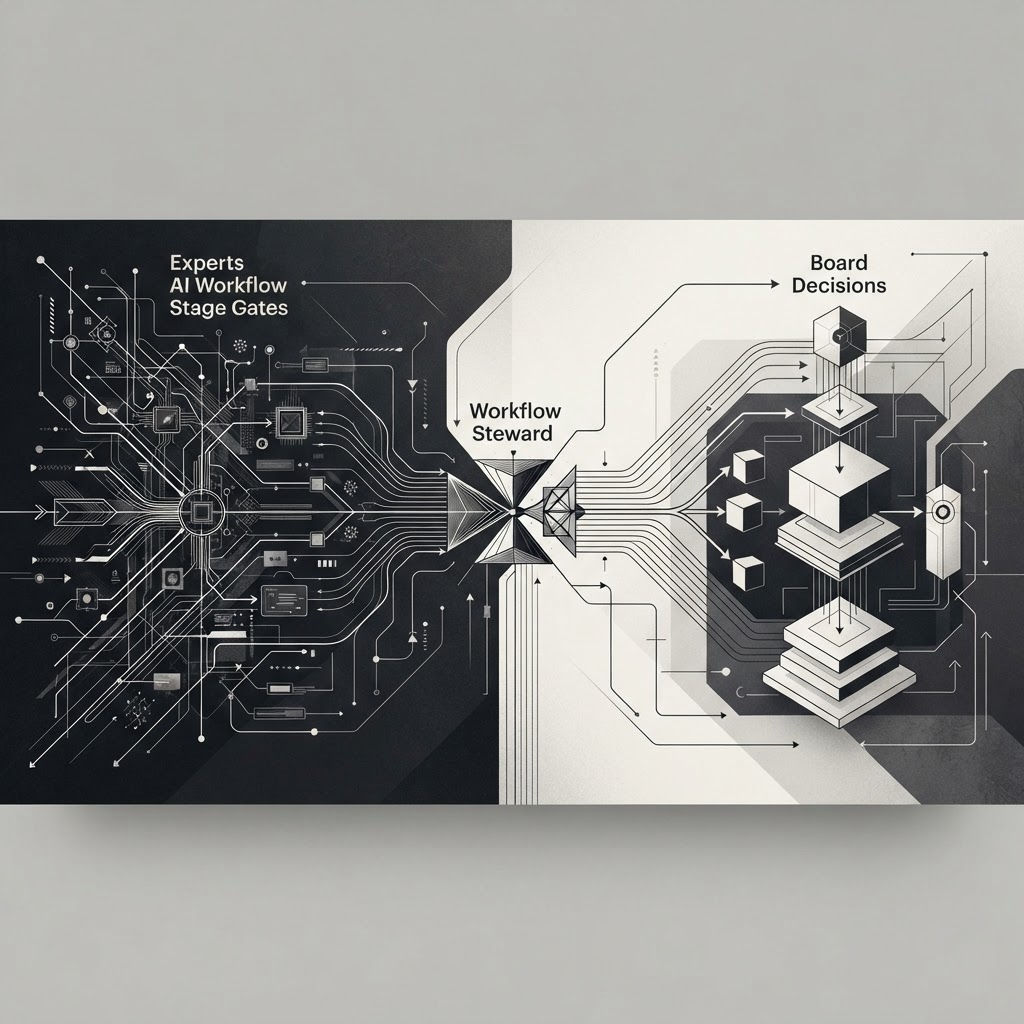
The Workflow Steward: the missing role between experts, AI and leadership
The Workflow Steward maintains process quality, evidence discipline and stage readiness without replacing expert judgment.
Read article →