Insights · Execution Risk
Cascade risk: what happens when one weak assumption spreads through the enterprise
A single false assumption can propagate through technology, process, decisions and organizational behavior.
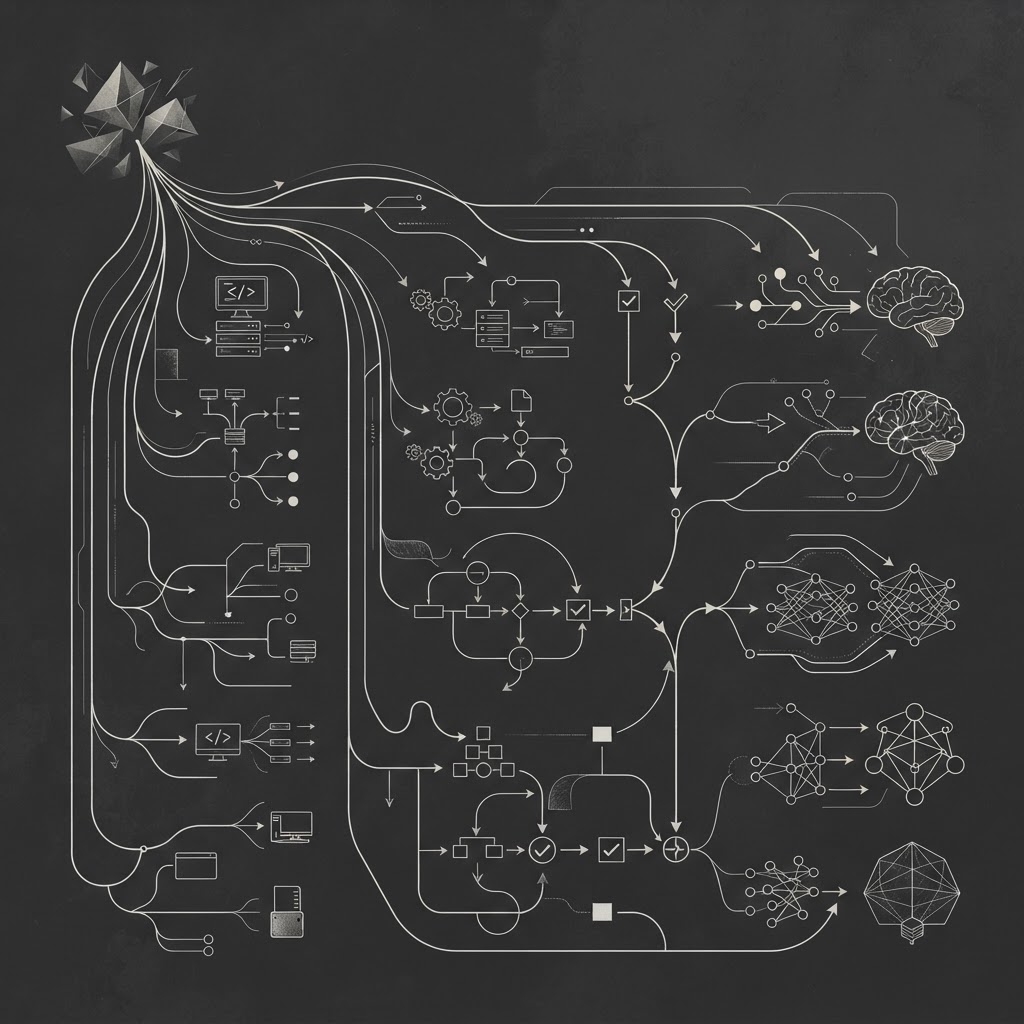
Cascade risk is created when an unverified condition becomes an input to several downstream choices. The original error may be small; the accumulated consequences are not.
01
How assumption chains form
An assumption becomes a cascade source when other plans rely on it without carrying its uncertainty forward. A target architecture assumes a vendor interface; process design assumes the architecture; training assumes the process; investment approval assumes the benefit. Each step can look internally coherent while the chain rests on one weak condition.
Mapping the chain makes uncertainty portable. Downstream owners can see not only the statement they received but also its evidence, confidence, validation status and failure consequence.
02
Technical and platform cascade
Technical cascade occurs when a component, model, data contract or integration is treated as stable before it has been verified. A platform dependency can then shape security design, operating process and procurement. If the dependency changes, several decisions require recall.
Containment uses interface tests, alternative paths, explicit versioning and impact maps. It does not require avoiding shared platforms; it requires knowing where shared assumptions concentrate consequence.
Standardize the process, but do not standardize thinking.
03
Process and decision cascade
A process cascade begins when an untested workflow is embedded in roles, controls and service commitments. A decision cascade occurs when one approval is cited as justification for later choices even though the approval covered a narrower question.
Governed decision records should state scope, evidence and expiry conditions. When a foundational condition changes, affected decisions can be reopened rather than defended through organizational momentum.
04
Cognitive cascade and collective certainty
Cognitive cascade happens when repetition creates perceived truth. Teams align their language, challenge declines and alternative evidence receives less attention. AI-generated summaries can intensify this effect because confident prose hides how many claims share the same source.
A structured dissent mechanism and source-level evidence view help separate independent confirmation from repeated interpretation. The system should preserve minority evidence until it is resolved, not merely count how many participants agree.
05
Impact paths and corrective action
An impact path links the source assumption to affected technology, process, decisions, stakeholders and value. It helps prioritize response: some branches can be isolated, others require stopping a stage, and others can proceed with monitoring.
Corrective action should target the earliest controllable point. Replacing a source assumption may be cheaper than patching every downstream symptom. Owners, deadlines and validation evidence make the correction auditable.
06
Recall and revalidation
When evidence changes, recall identifies outputs that used the old condition. Revalidation asks whether each output remains acceptable, needs revision or must be withdrawn. This is the governance equivalent of dependency management in software.
Recall should be proportionate. Not every wording change requires portfolio disruption, but high-impact assumptions should carry clear triggers. The audit trail records why a conclusion remained valid or changed.
07
A practical enterprise example
A service program assumes customers will adopt a self-service channel. That assumption influences staffing, CRM configuration, support targets and expected savings. Early evidence shows one customer segment cannot use the channel. Without cascade control, each workstream treats the issue locally.
With an impact map, leadership can preserve the general strategy while changing segment design, benefit assumptions and support capacity. The process is standardized—evidence, challenge, recall and decision—but thinking remains open to context.
FAQ
Direct answers
Is every dependency a cascade risk?
No. Cascade risk becomes material when a weak or changing condition has consequential downstream reliance.
What is recall?
Recall identifies conclusions and decisions affected when their supporting evidence or assumptions change.
Continue reading
Related articles
Execution Readiness: what leadership should know before commitment
A structured way to evaluate whether a plan has sufficient clarity, ownership, evidence and capability to move forward.
Read article →
Evidence first: preventing AI observations from becoming organizational truth
AI output should remain an observation until evidence, challenge and human validation justify operational use.
Read article →
Why every critical workflow needs a structured dissent mechanism
Red Team reviews and mandatory divergent views reduce collective blindness and expose weak conclusions before commitment.
Read article →