Insights · Workflow Governance
Why every critical workflow needs a structured dissent mechanism
Red Team reviews and mandatory divergent views reduce collective blindness and expose weak conclusions before commitment.
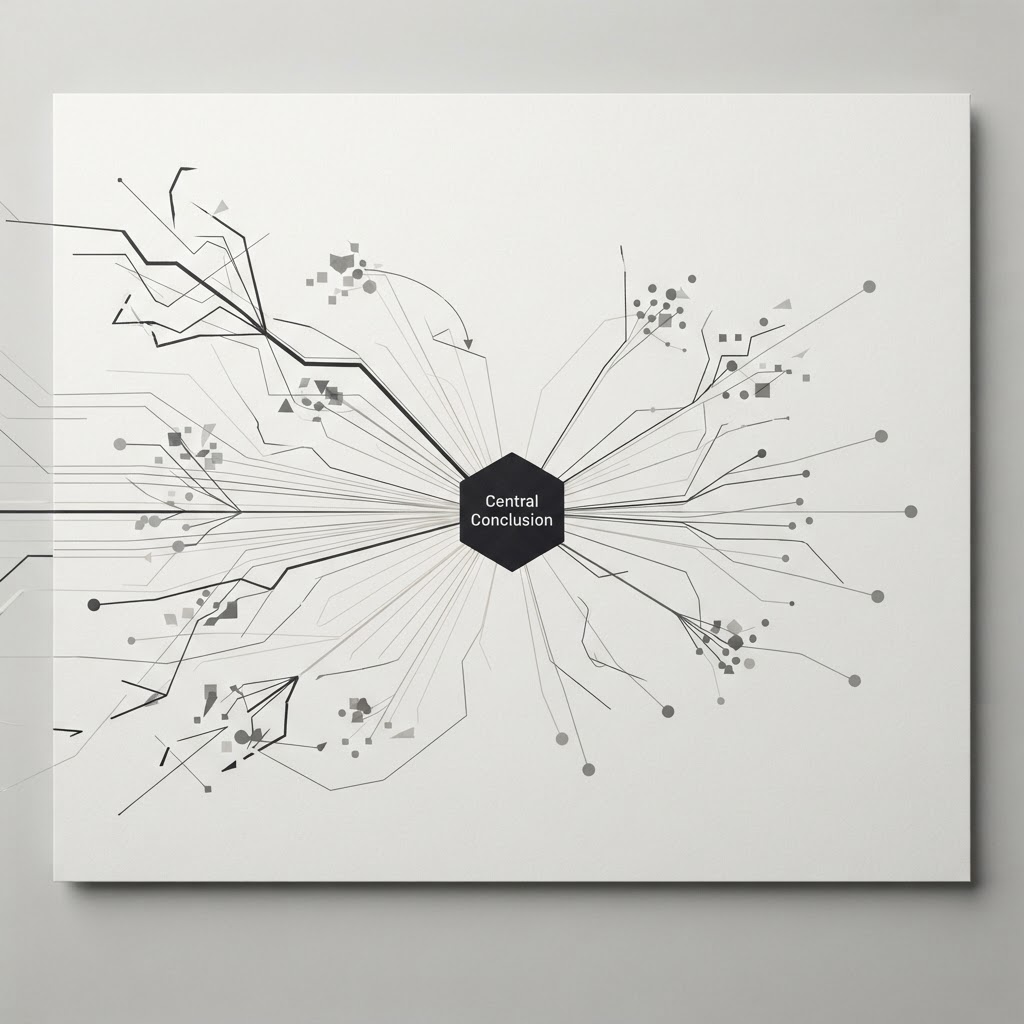
Critical workflows need a legitimate path for disagreement. Structured dissent exposes missing evidence and weak conclusions without converting conflict into employee scoring or rewarding opposition for its own sake.
01
Why groups converge too early
Teams converge because deadlines, hierarchy and shared incentives make continued challenge uncomfortable. A coherent narrative forms, and new evidence is interpreted through it. AI summaries can accelerate convergence by presenting the dominant view as a clean conclusion.
Premature convergence is a workflow condition, not a judgment about individual courage. Governance should create a required stage for challenge so dissent does not depend on personality or status.
02
Missing perspectives and divergent views
A divergent view states a materially different interpretation, identifies its evidence and explains the decision consequence. It may come from another function, customer context, technical constraint or risk owner.
Mandatory divergence does not mean manufacturing disagreement. Reviewers can record that no credible alternative was found, provided the search and evidence are visible.
Consensus is useful only after the workflow has made room for credible disagreement.
03
Red Team prompts
Useful prompts ask which assumption carries the most consequence, what evidence would reverse the conclusion, who is affected but absent, and how a competitor, regulator or operator might interpret the plan.
Prompts should be tailored to stage and context. Generic adversarial language creates noise; focused questions reveal testable weaknesses.
04
Evidence-based challenge
Challenge should address claims and evidence, not people. The challenger references missing, contradictory or differently weighted information. The original team responds with evidence, revision or a stated reason for maintaining the conclusion.
This exchange becomes part of decision continuity. Leadership can see whether dissent was resolved, bounded or explicitly accepted.
05
Resolving disagreement
Resolution can mean agreement, a revised conclusion, a controlled experiment, parallel options or an accountable decision under uncertainty. Artificial consensus is unnecessary and can hide material risk.
Rejected alternatives should be documented with rationale and trigger conditions. If circumstances change, the workflow can revisit them without reconstructing the debate.
06
Leadership use of dissent
Leaders should protect the legitimacy of evidence-based challenge and distinguish it from delay without substance. They can ask whether the strongest contrary case was considered and what would cause the decision to be reopened.
The output is not a measure of employee attitude. It is a governed record of how a critical conclusion was tested before commitment.
07
A practical Red Team review
Before a shared-service rollout, the primary case assumes standardized local processes. A divergent review identifies regulatory and customer exceptions in two markets. The team tests those conditions and changes the rollout boundary.
The challenge does not defeat the strategy. It prevents an avoidable cascade and documents why the remaining scope is ready.
FAQ
Direct answers
Does structured dissent create conflict?
It creates a governed channel for evidence-based challenge so disagreement can be resolved before commitment.
Is dissent used to score employees?
No. It evaluates workflow conclusions and evidence, not individual behavior.
Continue reading
Related articles

The Workflow Steward: the missing role between experts, AI and leadership
The Workflow Steward maintains process quality, evidence discipline and stage readiness without replacing expert judgment.
Read article →
Cascade risk: what happens when one weak assumption spreads through the enterprise
A single false assumption can propagate through technology, process, decisions and organizational behavior.
Read article →
Evidence first: preventing AI observations from becoming organizational truth
AI output should remain an observation until evidence, challenge and human validation justify operational use.
Read article →